
Fossil Brachiopods for Sale
Fossil Brachiopods for Sale – Brachiopod shells have two valves that are distinct in shape and size.
The brachial valve is usually the smaller of the two valves and has supports on the inside to help support the lophophore (feeding organ).
Brachiopods first appeared during the earliest Cambrian Period 500 million years ago. They were a diverse and abundant group until they were decimated during the Permian Extinction event approx. 252 million years ago.
Some Brachiopods survived and are well represented today but they never recovered in numbers and diversity as they had been prior to the extinction event.
If you are looking for Fossil Brachiopods for sale we have specimens from Kentucky, Ohio, New York and other locations.
Showing 1–50 of 99 results
-
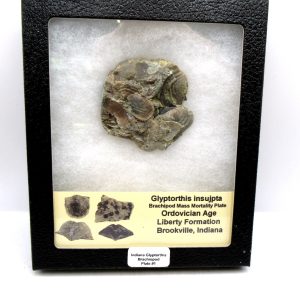
Glyptorthis Ordovician Brachiopod Fossils for Sale – Indiana #1 (2.24″)
$20.00 -
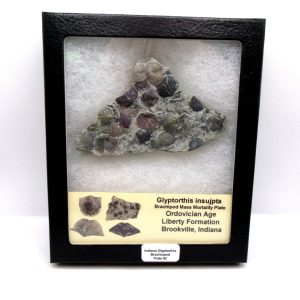
Glyptorthis Ordovician Brachiopod Fossils for Sale – Indiana #2 (3.92″)
$30.00 -
Sold out!
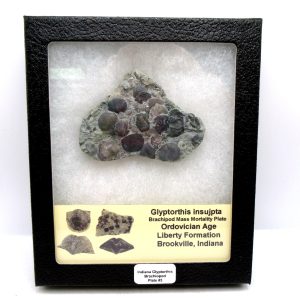
Glyptorthis Ordovician Brachiopod Fossils for Sale – Indiana #3 (3.0″)
$30.00 -
Sold out!
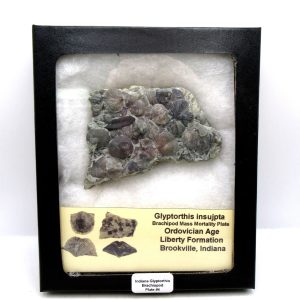
Glyptorthis Ordovician Brachiopod Fossils for Sale – Indiana #4 (3.51″)
$30.00 -
Sold out!

Glyptorthis Ordovician Brachiopod Fossils for Sale – Indiana #5 (3.45″)
$30.00 -
Sold out!
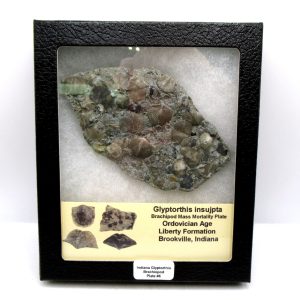
Glyptorthis Ordovician Brachiopod Fossils for Sale – Indiana #6 (4.52″)
$40.00 -
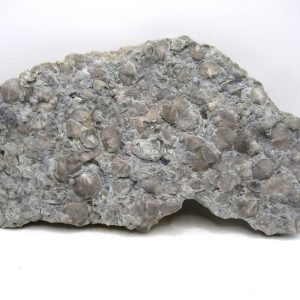
Glyptorthis Ordovician Brachiopod Fossils for Sale – Indiana #7 (8.11″)
$75.00 -

Stringocephalus Brachiopod | Burma #1
$15.00 -

Stringocephalus Brachiopod | Burma #10
$15.00 -

Stringocephalus Brachiopod | Burma #11
$15.00 -

Stringocephalus Brachiopod | Burma #12
$15.00 -

Stringocephalus Brachiopod | Burma #13
$15.00 -
Sold out!

Stringocephalus Brachiopod | Burma #14
$15.00 -

Stringocephalus Brachiopod | Burma #15
$15.00 -

Stringocephalus Brachiopod | Burma #16
$15.00 -

Stringocephalus Brachiopod | Burma #17
$15.00 -
Sold out!

Stringocephalus Brachiopod | Burma #18
$15.00 -
Sold out!

Stringocephalus Brachiopod | Burma #19
$15.00 -

Stringocephalus Brachiopod | Burma #2
$15.00 -

Stringocephalus Brachiopod | Burma #20
$15.00 -

Stringocephalus Brachiopod | Burma #21
$15.00 -

Stringocephalus Brachiopod | Burma #22
$15.00 -

Stringocephalus Brachiopod | Burma #23
$15.00 -

Stringocephalus Brachiopod | Burma #24
$15.00 -

Stringocephalus Brachiopod | Burma #3
$15.00 -

Stringocephalus Brachiopod | Burma #4
$15.00 -

Stringocephalus Brachiopod | Burma #5
$15.00 -

Stringocephalus Brachiopod | Burma #6
$15.00 -

Stringocephalus Brachiopod | Burma #7
$15.00 -

Stringocephalus Brachiopod | Burma #8
$15.00 -

Stringocephalus Brachiopod | Burma #9
$15.00 -

Arthyris New York Brachiopod #2
$7.50 -
Sold out!

Kentucky Platystrophia Brachiopod #2
$10.00 -
Sold out!
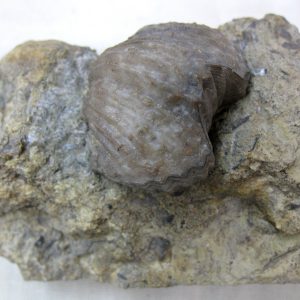
Kentucky Platystrophia Brachiopod #3
$10.00 -
Sold out!
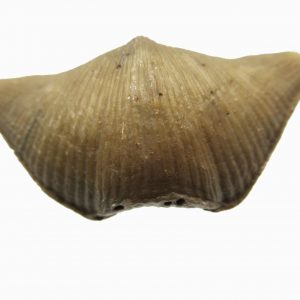
Russian Cyrtospirifer Brachiopod #1
$15.00 -

Russian Cyrtospirifer Brachiopod #10
$15.00 -
Sold out!

Russian Cyrtospirifer Brachiopod #11
$15.00 -
Sold out!

Russian Cyrtospirifer Brachiopod #12
$15.00 -
Sold out!

Russian Cyrtospirifer Brachiopod #13
$15.00 -
Sold out!

Russian Cyrtospirifer Brachiopod #14
$15.00 -
Sold out!

Russian Cyrtospirifer Brachiopod #15
$15.00 -
Sold out!

Russian Cyrtospirifer Brachiopod #16
$15.00 -
Sold out!

Russian Cyrtospirifer Brachiopod #17
$15.00 -
Sold out!
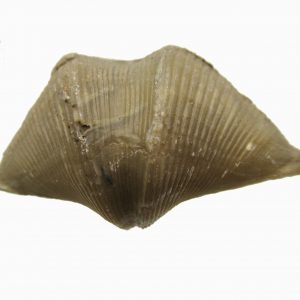
Russian Cyrtospirifer Brachiopod #18
$15.00 -
Sold out!

Russian Cyrtospirifer Brachiopod #19
$15.00 -

Russian Cyrtospirifer Brachiopod #2
$15.00 -
Sold out!

Russian Cyrtospirifer Brachiopod #21
$15.00 -
Sold out!

Russian Cyrtospirifer Brachiopod #22
$15.00 -
Sold out!

Russian Cyrtospirifer Brachiopod #23
$15.00 -
Sold out!

Russian Cyrtospirifer Brachiopod #24
$15.00
- Buy Fossils
- Fossils for Sale
- Large Selection
- Great Prices and Great Selection
- Authenticity Guaranteed
- Satisfaction Guaranteed
- Your TRUSTED SOURCE for over 25 years!
- Many more videos are available on our YouTube Channel.
Fossil Brachiopods: Identification, Evolution, and Paleoenvironment Significance
Brachiopods are among the most abundant and informative fossils in the world’s Paleozoic rock record. Although they resemble clams at first glance, brachiopods belong to a distinct phylum with a long evolutionary history stretching back over 540 million years. Their prolific fossil record makes them essential for biostratigraphy, paleoecology, and identifying ancient marine environments.
This in-depth guide explains what brachiopods are, how to identify them, where they are found, and why they matter to paleontologists and fossil collectors.
What Are Brachiopods?
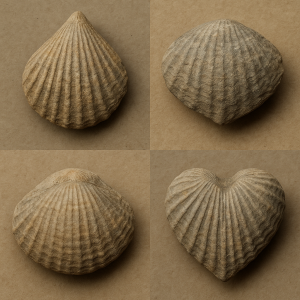
Brachiopods (Phylum Brachiopoda) are marine, shelled invertebrates with two valves (shells) positioned dorsal and ventral, unlike bivalves whose shells are left and right. This unique structure allows specialists to distinguish them quickly in the fossil record.
Key Biological Traits
- Lophophore: A specialized feeding organ used to filter plankton from seawater.
- Sessile lifestyle: Most brachiopods anchored to the seafloor via a pedicle, a fleshy stalk.
- Symmetry: Valves are symmetrical individually (bivalves are symmetrical between the two valves).
- Marine environment only: All known brachiopods are ocean-dwelling.
Evolution and Geological Range
Brachiopods thrived in Paleozoic oceans. Their history can be broken into major evolutionary phases:
Cambrian Explosion (540–485 Ma)
- First appearance of both inarticulate and articulate brachiopods.
- Rapid diversification of shell types and life habits.
Ordovician–Devonian Peak
- Considered the “Age of Brachiopods.”
- Over 5,000 species existed globally.
- Extremely diverse in carbonate shelf environments.
Carboniferous–Permian
- Continued dominance in warm, shallow seas.
- Many families wiped out during the Permian–Triassic Mass Extinction (~252 Ma), the largest in Earth’s history.
Mesozoic–Cenozoic Decline
- Bivalves replaced many ecological roles.
- Today fewer than 450 living species remain—compared to tens of thousands in the fossil record.
How to Identify Brachiopod Fossils
When distinguishing brachiopods from clams or other marine fossils, look for the following diagnostic features:
- Symmetry Pattern
- Brachiopods: Each valve is individually symmetrical along a midline.
- Bivalves: Symmetry occurs between left and right shells, not within one shell.
- Pedicle Foramen (Hole)
Many articulate brachiopods show a small opening where the pedicle once protruded.
- Valve Shape and Ornamentation
Common patterns include:
- Radial ribs (classic in Spiriferida)
- Concentric growth lines
- Wing-like extensions
- Deep sulcus (groove) or fold
- Internal Structures
Collectors rarely see these unless the fossil is broken or cut, but specialists identify:
- Spiralia (coiled supports for the lophophore)
- Dental plates
- Muscle attachment scars
Common Types of Brachiopod Fossils
Here are the groups most often encountered by collectors and paleontologists:
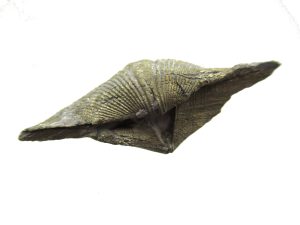
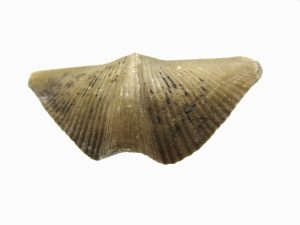
- Extremely common in Devonian rocks.
- Distinctive wing-shaped shells and strong ribs.
Strophomenids
- Broad, concave shells that resemble potato chips.
- Common in Ordovician and Silurian deposits.
Orthids
- Classic, ribbed Paleozoic forms.
- Often used for biostratigraphy.
Productids
- Spiny, thick shells from the Carboniferous and Permian.
Where Are Brachiopod Fossils Found?
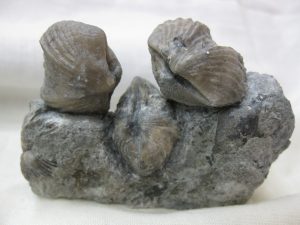
Brachiopods occur worldwide but are especially abundant in Paleozoic marine sedimentary rocks such as:
- Limestone
- Shale
- Dolostone
- Siltstone
Prime fossil-bearing regions include:
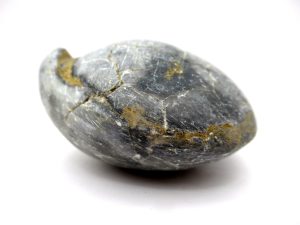
- Midwestern USA (Ohio, Indiana, Iowa) — world-class Devonian and Ordovician brachiopods
- UK (Wenlock Limestone, Welsh Basin, Devon coast)
- Canada (Ontario’s Niagara Escarpment, Northwest Territories)
- Australia (New South Wales, Victoria)
- Russia & China (rich Paleozoic sequences)
Why Brachiopods Matter in Paleontology
Brachiopods are more than just common fossils—they are powerful tools for scientific interpretation.
✔ Biostratigraphy
Brachiopod species evolved rapidly and globally, making them excellent for dating rock layers.
✔ Paleoenvironment Indicators
Different groups signal varying conditions:
- Strophomenids → quiet, deeper waters
- Productids → warm carbonate shelves
- Lingulids → soft, muddy substrates
✔ Evolutionary Studies
Their long, continuous fossil record helps track:
- Shell evolution
- Mass extinction recovery
- Marine ecosystem development
✔ Climate and Sea-Level Reconstruction
Changes in brachiopod diversity closely follow major climatic and oceanographic shifts.
Buy Fossil from Prehistoric Fossils with Confidence